


How does an LPG reducer work?
An LPG reducer is one of the key components in an autogas system. It converts liquid LPG from the tank into vapour while reducing tank pressure to the operating pressure specified for the system. Also known as an LPG vaporizer or pressure reducer, it regulates the gas supply so that LPG can reach the engine safely through the injectors.
This process requires heat, supplied by the engine coolant using waste heat from the engine. The LPG reducer therefore also acts as a heat exchanger.
LPG reducers have separate passages for coolant and fuel. Depending on the design, one or more diaphragms control the pressure. The reducer is connected to the vehicle’s cooling circuit so that warm coolant heats it. Liquid LPG flows through the fuel passage, absorbs heat and changes into vapour. The reducer requires a specific operating pressure; on adjustable models, a specialist workshop sets it according to the manufacturer’s instructions.
The reducer must remain leak-tight at all times. Leaks can prevent it from maintaining the required operating pressure. Depending on the design, an internal leak can allow LPG to enter the cooling circuit and cause further damage.
Common LPG reducer brands include Prins, BRC, KME, Landi Renzo, Zavoli, Lovato and Tartarini.
Which LPG reducer matches your engine power?
LPG reducers usually have a power rating in kW related to the engine being converted. Treat the stated rating as an upper limit when selecting a reducer for reliable, safe long-term operation.
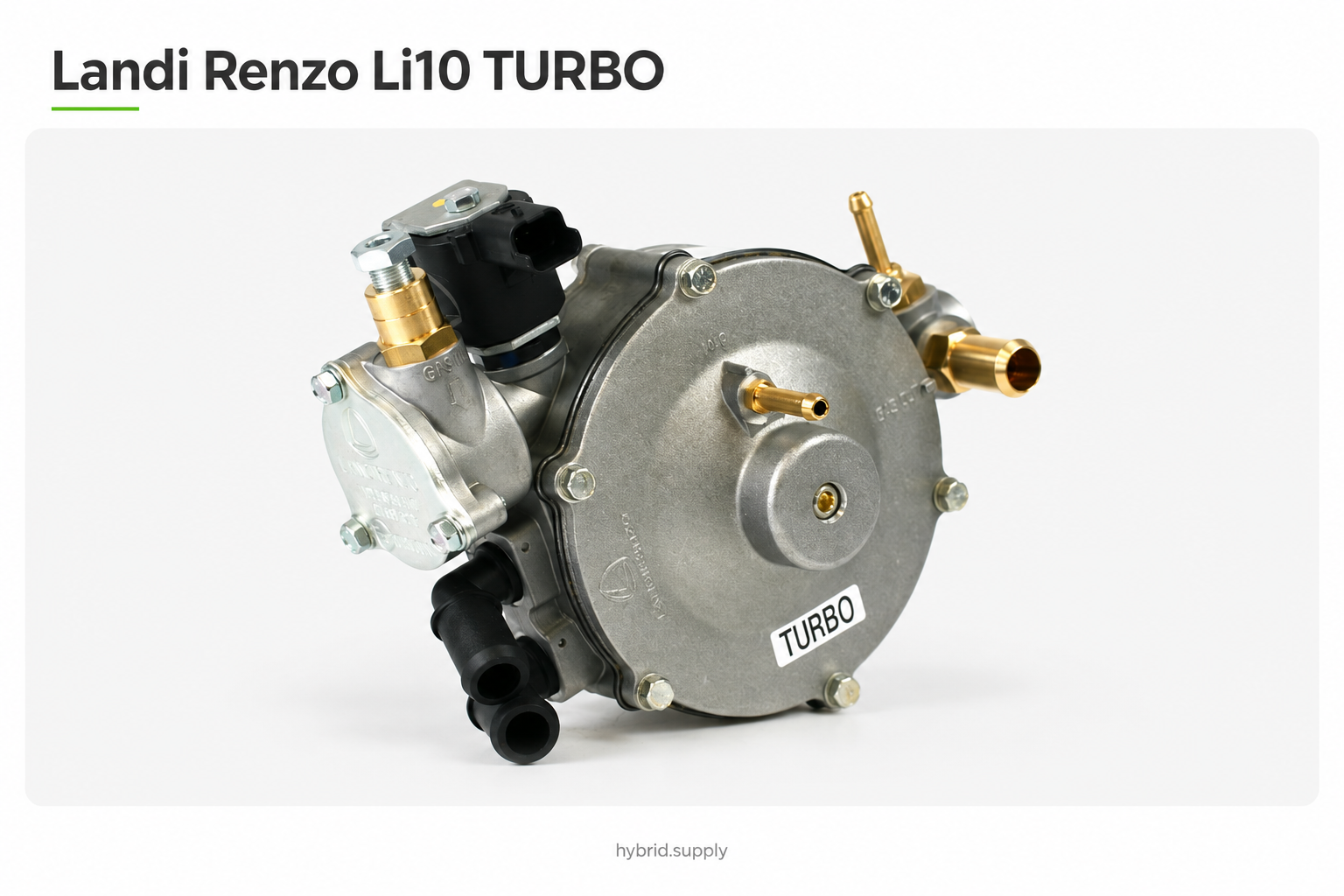
Many models come in several power ratings, such as the AC R01 reducer up to 110 kW, the AC R01 reducer up to 185 kW and the Landi Renzo Li10 TURBO up to 160 kW. The Li10 TURBO product data specifies an outlet pressure of 1.2 bar and a maximum inlet pressure of 28 bar. These figures apply to that model and are not universal adjustment values. System approval, connections and installation requirements must also match. Check the approval marking on the actual component; the linked AC R01 is marked E8 67R-01 4619.
What are the symptoms of a faulty LPG reducer?
Possible causes of reducer faults include poor LPG quality leading to sticky deposits, incorrect installation and a damaged diaphragm.
A reducer needs to maintain a stable operating pressure. Contamination, sticking or leaks can prevent it from doing so. Depending on the fault, pressure may rise or fall, causing the gas system to shut down and the vehicle to switch back to petrol. The LPG ECU controls this changeover. A workshop reads the stored fault using the system manufacturer’s diagnostic software; suitable interfaces are available under diagnostic equipment.
If you smell gas or suspect a leak, stop using the LPG system and have a qualified specialist workshop investigate. Do not open the coolant expansion tank to check for a gas smell yourself. There is also a risk of scalding when the engine is warm.
Points to consider with Prins LPG systems
Some Prins systems may temporarily prevent a return to LPG operation in certain fault conditions. A fixed 10-minute lockout must not be assumed for every Prins generation or fault code. The exact system, stored fault and relevant diagnostic instructions determine the correct procedure. A lockout alone does not prove that the reducer is faulty.
On older Prins reducers, an internal leak may be a possible cause of gas entering the cooling circuit. Unusual cooling-system pressure should therefore be investigated systematically before replacing components such as the cylinder head gasket. The workshop needs to establish the source of the fault on the vehicle concerned.
A revised design on a newer reducer generation does not remove the need to inspect the actual component. It does not establish that the reducer cannot develop a fault.
Sticky deposits caused by poor LPG quality
Poor-quality LPG can leave deposits inside the reducer and cause its regulating mechanism to stick. This can prevent stable pressure regulation and cause the LPG system to switch back to petrol.
The specified liquid-phase filter upstream of the reducer traps contaminants according to its design. It cannot be assumed to provide complete protection against every oily residue. Both liquid-phase and vapour-phase filters are therefore among the first items to check when LPG operation is disrupted. You can find suitable products under gas filters and filter elements.
A specialist must always inspect the reducer to establish whether it works correctly. It may need replacement, or a repair using a suitable rebuild kit may be possible after checking its design, the damage and the manufacturer’s requirements.
LPG reducer problems caused by incorrect installation
Incorrect installation can cause LPG system faults. The reducer must be connected correctly to the cooling circuit and receive enough warm coolant. Poor flow, trapped air or incorrectly routed hoses can reduce heat transfer. This can lead to incomplete vaporisation, unstable gas pressure and a return to petrol operation. Follow the specific system manufacturer’s temperature and installation requirements; 70–90 °C is not a universal changeover temperature or adjustment value.
Should you repair or replace an LPG reducer?
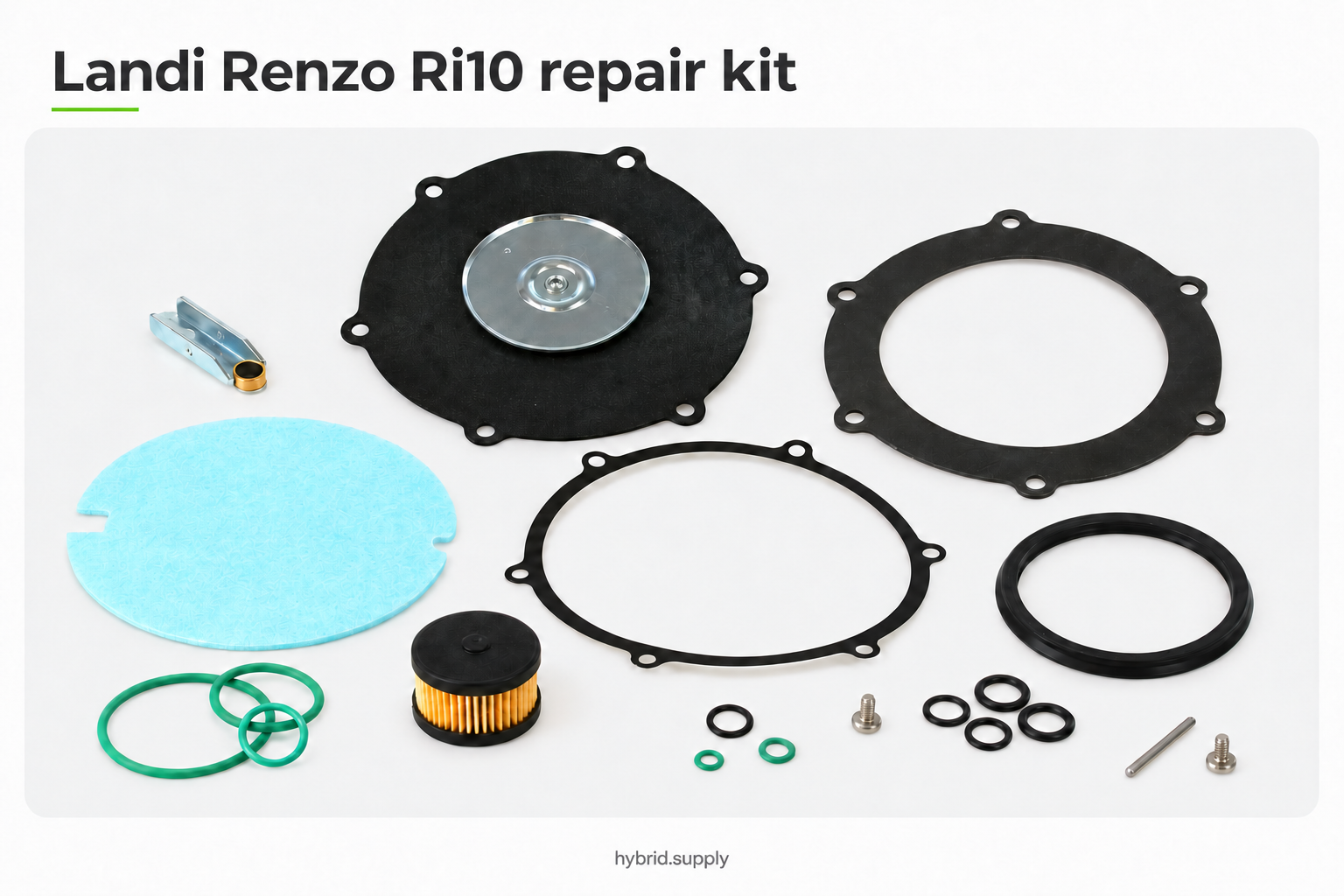
Repair kits can be used to refurbish suitable reducers from Prins, BRC, Landi Renzo and other manufacturers. For the Li10, for example, an original Landi Renzo Li10 repair kit is available. The exact version must match the existing reducer. Repairs should always be carried out by a specialist. Browse LPG reducer repair kits for various manufacturers, or find complete replacement units under LPG reducers.
After repair or replacement, a specialist workshop must carry out the prescribed leak tests, functional checks and adjustments.
If you are interested in these products or have any questions, please get in touch using our contact form.